Fractional Marketing Strategy: 7 Elements Every Effective Plan Should Include
Joseph Cashman • October 15, 2026

A fractional marketing strategy needs to do more than list out tactics. In my experience, the real value comes from connecting your business goals with the customers you want to reach, the resources you actually have, and the marketing activities that are most likely to move those goals forward.


That may sound straightforward, but in practice, I see many strategies fall short because they focus on there aspirations, not what it can realistically prioritize, execute, measure, and sustain.


1. Start With Business Goals and Honest Assessment of Your Marketing


Before the creation of any campaign, I start by clarifying what your organization is actually trying to accomplish. Are you focused on revenue growth, lead generation, launching something new, entering a different market, improving retention, building brand awareness, or addressing a marketing operation that is not delivering as expected?


Once the goals are clear, I take a close look at the current marketing landscape by auditing your site analytics, current SEO positions, sales process, marketing technology, existing vendors, and genral current performance.


The real work of strategy is to identify the gap between where you are now and where you want to be. This helps avoid chasing trendy tactics and keeps the focus on recommendations that fit your organization’s actual goals and constraints.


2. Understand the Audience, Market, and Buying Process

Neon purple futuristic platform with floating UI panels and a hand reaching in from the right

Once the business goals are clear, the strategy must shift to the customer. That means digging into how your customers actually think about their challenges, what they’re trying to achieve, how they compare options, and what ultimately shapes their decisions.


It’s common for organizations to describe their products and services using internal terms or technical language that feels natural from the inside. Since in reality, customers often don't search, compare, or make decisions using those same words.


This is where customer research, search data, competitive analysis, sales feedback, and your own performance metrics become especially valuable. These sources help answer questions like:


  • What problems or goals are driving the customer’s search?
  • Which terms and phrases do they actually use?
  • What objections or concerns slow the buying process?
  • Which competitors or alternative solutions are they considering?
  • What information do they need before they are ready to take the next step?


When you understand these patterns, you can shape everything that follows. From messaging and content to channel choices and lead generation, with much more confidence. A strong fractional marketing strategy should therefore be built from the customer’s point of view.


3. Clear Priorities Reveal the Right Channels


Once you have a clear view of your business objectives and your audience, the next step is to decide where to focus your efforts.  Most organizations have more marketing options than they have time, budget, or people to manage. The challenge is to make choices that fit your real constraints.


SEO researched content, email, paid media, social, video, CRM automation, sales enablement, webinars—each can play a role. The real question is which channels deserve your attention first, given your goals and resources.


Choosing the right medium and channels often means weighing competing considerations rather than looking at any one factor in isolation. This is where weighing out goals and realities start to shape your strategy:

Weigh This Against
Potential business impact -> Cost and effort required
Customer behavior -> Internal assumptions and preferences
Available budget -> Size of the opportunity
Internal resources -> Execution demands
Business urgency -> Expected time to results

A pitfall to avoid is treating every channel as a separate initiative. In reality, the strongest marketing programs work because the pieces reinforce each other.


Search or AI citation bring people in, UX/UI and content quality support deeper page penetration, which generate warm leads that are enrolled into automation in the form of  email nurturing and initiating discovery calls.


Paid campaigns can amplify a message that is already working organically. Automating bespoke CRM actions can help with retainment and customer delight.


The goal is not to do everything at once. It is to identify the mix of activities most likely to move your business forward, and to sequence them in a way your team can realistically support. A good strategy is as much about deciding what not to do.


4. Messaging Framework

Profile of a human head silhouette with glowing purple digital circuitry on a dark background

Once you’ve clarified your priorities, the next step is to shape a consistent story that ties your strategy together.


For many companies, especially those with technical or complex products, marketing can start to break down here. Internal teams often understand the product in great detail, but the customer may not immediately see why those details matter.


It's here where the role of the consultant becomes crucial: by ensuring alignment in how the collateral is molded to best represent the benefits that matter most to your customers, while also distinguishing it enough from your competitors, and lastly, how this campaign adapts across your chosen channels and mediums.

Messaging Framework Table
A Strong Messaging Framework Should Answer:
What problem are we helping the customer solve? What makes our approach different or better?
Which benefits deserve the most emphasis? What claims can we support confidently?
What language will make sense to the intended audience? How should the message change across different stages of the buying process?

The goal isn't to create a clever slogan and abuse it, but rather to create an engaging story. When your strategic foundation is locked-in, it’s much easier for your team to follow the script and keep the project aligned and moving forward.


5. Build the Strategy Around Real Resources and Execution Capacity


One of the easiest ways to create a strategy that looks impressive but fails in practice is to ignore who is actually going to execute it.


A company may have a long list of worthwhile opportunities—but that does not mean it has the people, budget, technology, or time to pursue all of them effectively. This is where a fractional strategy needs to get hands-on.


I start by understanding your real operating environment: what your internal team can reasonably handle, what budget is available, where I need to step in, and which tools you already have and which activities will need ongoing attention after launch. That last point is often underestimated.


It’s relatively easy to recommend a new technology, content calendars or automation solutions. But it’s much harder to plan for who will maintain it, monitor performance, respond to leads, update content, review data, and keep things moving once the initial excitement fades.


This is also where fractional engagements can look very different from one organization to the next.


Some organizations already have a capable marketing team and mainly need senior guidance, prioritization, and accountability. Others have limited internal capacity and need me to move between strategy, project management, coordination, and hands-on execution.


Neither approach is inherently better. The strategy needs to reflect the your budget and long term needs. A sophisticated plan that depends on resources you don’t have isn’t really a strategy. It’s a wish list.


The strongest fractional marketing strategy isn’t the most ambitious plan. It’s the plan your organization can realistically execute, sustain, and improve over time.


6. Measure What Actually Matters to the Business

Purple digital interface with user icons and silhouettes on a futuristic platform, suggesting online networking or security

I've experienced having more data than you know what to do with. Not all of it is useful. What matters is having a framework that helps you see whether your marketing is actually moving the organization toward its goals, not just creating vanity metrics.


Activity is not the same as progress: Traffic, impressions, clicks, followers, engagement, email opens, and leads, can generate buzz and excitment. But is any of it delivering outcomes the business actually needs.


More visibility does not always mean more value:  Context determines whether a number represents progress. A website can attract more traffic without producing better prospects. A campaign can generate a large number of leads that sales can't use. Search impressions can rise without producing clicks, and social engagement can increase without creating a meaningful business opportunity.


Measurement should always start with the business objective. The right metrics trace back to the goals you set at the beginning. That means distinguishing between activity, and actual outcomes.=


Follow the signal through to business value: Increasing organic impressions, for example, may be an encouraging early indication that search visibility is improving. But if the objective is qualified lead generation, the strategy ultimately needs to follow that visibility through clicks, engagement, inquiries, and sale opportunities.


Different initiatives require different timelines: Paid campaigns can begin producing measurable activity quickly, while SEO and content often require considerably more time. Improvements to positioning, CRM processes, analytics, or marketing infrastructure may initially produce better systems rather than immediate revenue. Judging every initiative against the same timeframe can cause organizations to abandon good strategies too early.


Reporting should lead to decisions: Measurement is most valuable when it tells the organization what to do next. Where should investment increase? What needs refinement? Which activity has reached its limit? What should stop altogether?


The right metrics do more than demonstrate that marketing happened. They help determine whether the strategy is working, why it is working, and what the organization should do next.


7. Good Digital Strategies are Always Living Plans


A marketing strategy should give you direction, but it should not become rigid. In my experience, the real value of any strategy shows up once you start executing and begin to see what customers actually respond to, which assumptions hold up, where new opportunities emerge, and what is not working as expected.


Research and experience can give you a solid starting point, but some answers only come once you put the plan into action.


As you move forward, campaign results, search trends, sales feedback, customer questions, conversion data, and competitor moves often reveal opportunities or gaps that were not obvious at the outset.


The real challenge is deciding when new information is meaningful enough to warrant a change. A disappointing result does not always mean the strategy is off track, just as an early win does not mean an initiative deserves unlimited investment.


Good judgment comes from spotting patterns, understanding the story behind the numbers, and separating short-term noise from signals that should actually shape the plan.


Priorities can shift for reasons that have little to do with marketing results. Maybe a product launch moves up, your team unexpectedly changes or a budget gets cut.  Sometimes a channel you thought was secondary starts delivering better results than expected. A strategy needs enough flexibility to adapt when the business itself changes.


One of the more difficult decisions is knowing when to stop. Companies can continue investing in an initiative simply because time and money have already gone into it.  Strategic thinking should challenge mood and opnions especaiily when evidence can support a redirection of resources or protect the larger business objectives.


This is also why ongoing fractional involvement can be more valuable than a one-time strategy engagement. The consultant understands why the original decisions were made, sees how those decisions perform in practice, and can help the organization adjust without losing sight of the broader goals.


A strong fractional marketing strategy gives you direction without locking you in. The plan sets out where you are trying to go, but ongoing measurement, experience, and judgment help you figure out the best way to get there.


A Fractional Marketing Strategy Should Be Built for the Business You Actually Have


A strong fractional marketing strategy ties your business goals, customer needs, market realities, resources, execution, and measurement into a plan your team can actually use.


A strategy only creates value when it fits your actual budget, technology, and capacity to follow through.


Sometimes that means providing senior-level guidance to an established marketing team.


Other times, it calls for a more hands-on fractional role that moves between planning, project management, implementation, and optimization.

That flexibility is one of the real advantages of fractional marketing. The engagement can be shaped around what you actually need, instead of forcing every organization into the same model.


I often work across both strategy and execution. I help organizations figure out what deserves attention, how the pieces fit together, and what can realistically be accomplished with the resources you have.


The goal isn’t just to create a marketing plan. It’s to build a strategy you can execute, measure, and improve.


Split portrait of two smiling people, one with glasses and curly hair, divided by a glowing vertical line.
By Joseph Cashman • October 3, 2026
Scientific marketing takes more than marketing expertise. Learn how the right consultant bridges science, search, strategy, and customer value without losing accuracy.
Collage of blue-toned analytics dashboards and charts on a white background
By Joseph Cashman • August 7, 2026
Compare HubSpot, WordPress, and Squarespace for a growing organization. Learn when to integrate HubSpot, when to migrate, and what implementation really requires.
wooden figurines denoting the various representations of Fractional Marketing employees
By Joseph Cashman • August 4, 2026
Compare a fractional digital marketing consultant, marketing director, agency, and in-house hire to find the right support model for your organization.
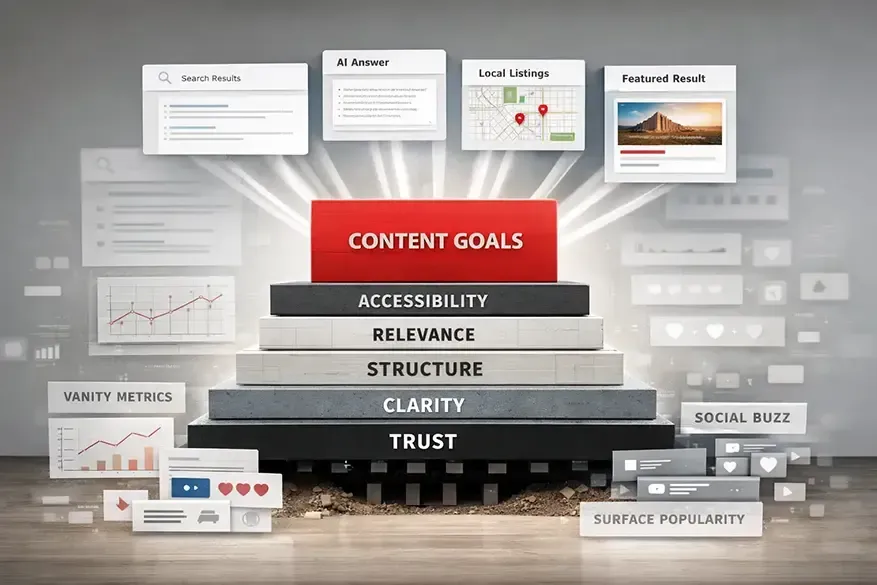
Stacked blocks labeled content goals, accessibility, structure, clarity, and trust in a workspace infographic
By Joseph Cashman • April 17, 2026
Search has changed, but strong SEO still matters. See what old signals matter less, what still counts, and why helpful content drives lasting visibility.
A person walks a tightrope from a storm-filled landscape with an email icon toward a prosperous side with growth charts.
By Joseph Cashman • April 14, 2026
Learn digital marketing strategies to sustain ROI during downturns. Adapt to consumer behavior changes for continued success.
A laptop computer with a magnifying glass and graphs on the screen.
By Joseph Cashman • June 19, 2025
CASE STUDY: From the ashes of Therano's the Mitra Microsampler comes ahead as a viable, novel solution to capillary blood collection.
A man with a beard and glasses next to a woman with a robotic head.
By Joseph Cashman • April 15, 2025
Learn how SEO impacts AI Summaries. What are some ways to improve your GEO? Learn some strategies here.
A group of people are holding hands in front of a row of houses.
By Joseph Cashman • March 25, 2025
Learn how a website redesign improved the Southwest Fair Housing Council's online presence.
A wooden wall with a row of potted plants growing out of it.
By Joseph Cashman • March 17, 2025
Cost-effective digital marketing strategies to boost ROI in uncertain times. Learn SEO content creation, repurposing, free analytics tools, and local SEO tips.
A computer generated image of a green and white abstract background.
By Joseph Cashman • February 26, 2025
A review of how technology over the years has helped small and medium businesses thrive in an ever-changing world.
Show More