Custom Digital Solutions for Businesses: What's Possible with AI-Assisted Development?
Joseph Cashman • November 15, 2026

Technology that used to require big budgets, specialized teams, and complex infrastructure is now available to most businesses. AI advances, are offering organizations the ability to build custom digital solutions like customer portals, business applications, automated workflows, and specialized online tools without the usual high costs and complications.


Decision-makers can solve real business problems by working with experienced professionals to implement practical, cost-effective digital solutions.


Digital Capabilities Once Reserved for Large Companies Are Now Within Reach

Not long ago, developing a custom business application often meant committing to a lengthy, expensive project. For many organizations, particularly those with limited technical resources, the more practical option was to purchase off-the-shelf software—even if it wasn't a perfect fit.


AI-assisted development is helping change that equation. By accelerating coding, prototyping, and troubleshooting, AI can reduce the time and resources required to develop custom digital solutions.


Combined with established platforms, existing business systems, and experienced technical oversight, these capabilities are opening new possibilities for organizations that may never have considered commissioning their own digital tools.


The result is greater flexibility in how businesses approach technology investments. Rather than choosing between expensive custom development and recurring subscriptions for software with unnecessary features, organizations can increasingly explore targeted solutions built around their specific requirements.


Whether that means extending an existing website, connecting separate systems, or developing a specialized application, in this new AI era the starting point is now forgetting the costs of the past and clearly identifying what the business actually needs to get ahead and then begin your request for quotes.


What Can Businesses Actually Build with AI-Assisted Development?

Futuristic green digital dashboard with floating screens and a person standing on a glowing platform

Opportunities now go beyond traditional websites and mobile apps. Businesses can create specialized digital tools to enhance customer experiences, streamline operations, and address needs that generic software cannot meet.


Consider a service-based business that relies on phone calls, emails, and spreadsheets to manage customer inquiries. A custom digital solution could allow customers to request estimates, schedule appointments, upload project details, and track service requests through a single online interface.


Behind the scenes, automated workflows could organize those requests, notify employees, and update customer records—reducing administrative work while improving responsiveness. Here are some other practical ways businesses can use custom digital tools:


  • Customer and client portals: Secure online spaces where customers can access documents, review project updates, submit requests, or manage account information.
  • Interactive directories and searchable databases: Custom libraries, product lists, or service directories that let visitors quickly find what they need with search and filter options.
  • Business process automation: Custom workflows that link current systems, move information where it needs to go, send notifications, and reduce repetitive manual work.
  • Custom dashboards and reporting tools: Central places to view business data, customer activity, project updates, and overall performance.
  • Specialized business applications: Digital tools built for specific needs, like quote calculators, scheduling tools, intake forms, or project management systems for internal use.


Not every solution requires building an entirely new application. Sometimes the most effective approach is to extend an existing website, integrate systems a business already uses, or create a focused tool that solves one persistent problem.


This shift is already taking place. According to RSM, businesses are using AI-assisted development to create everything from internal dashboards and customer portals to workflow automation that traditionally required significantly more development time and resources.


How AI Makes Custom Digital Products More Accessible

A digital marketing consultant work with AI assited development tech in neon green lit office space

AI enables development teams and experienced consultants to move more efficiently from an initial concept to a functional digital product, potentially reducing development time and implementation costs.


AI also makes it more practical to explore and refine ideas before committing to a larger investment. This cooperative method can help identify problems earlier and ensure the finished product better reflects the organization's needs. 


However, AI-assisted development is not the same as autonomous development. AI-generated code and functionality still entail careful evaluation, testing, and professional supervision.

AI also makes it more practical to explore and refine ideas before committing to a larger investment. This cooperative method can help identify problems earlier and ensure the finished product better reflects the organization's needs.


However, AI-assisted development is not the same as autonomous development. AI-generated code and functionality still entail careful evaluation, testing, and professional supervision.


Decisions involving security, data privacy, user experience, system integrations, scalability, and long-term maintenance are necessary to produce a dependable product.


The real advantage comes from combining AI efficiency with human expertise. AI can accelerate the technical work, while experienced professionals provide the strategic direction, technical judgment, and accountability needed to turn a credible concept into a reliable business solution.


Custom Development vs. Software Subscriptions: Where Businesses Can Save


Green futuristic 3D cityscape with a large metallic ring, stairs, and glowing screens

Off-the-shelf software and subscription-based platforms offer businesses convenient access to established tools and functionality. However, recurring licensing fees can become a significant long-term expense, particularly when organizations pay for features they rarely use or must adapt their operations to fit a third-party platform's limitations.


Custom digital development offers another approach. Rather than subscribing to a packaged solution, businesses can invest in functionality designed around their specific needs. AI-assisted development, combined with existing technology infrastructure, can make this approach increasingly cost-effective.


This shift is influencing real purchasing decisions. In its 2026 State of AI research, McKinsey reported that 32% of respondents said their organizations had opted against purchasing at least one software product or feature because they could develop the functionality internally using AI coding tools.

FOR EXAMPLE:

Trajan Scientific and Medical needed a better way to manage and showcase more than 600 scientific publications. A third-party vendor proposed a hosted solution with an annual invoice of approximately $15,900.


Rather than commit to an ongoing vendor subscription, I along with AI assisted coding developed a custom, searchable Microsampling & Microbiopsy Publications Library using HubSpot’s existing HubDB infrastructure. The solution provides publication search, filtering, and an easier way to maintain the growing library—all within Trajan’s existing website.


With an estimated one-time development investment of approximately ~$5,000, TRAJAN gained a tailored, company-controlled solution without an additional annual publication-library subscription.

The financial advantage of custom development can be obvious when compared to subscription models. Even if a subscription model is more affordable than the one-time estimated spend, ongoing costs can eventually exceed the cost of a bespoke solution. Of course, custom development can also include ongoing expenses like security updates, hosting costs, and future enhancements or integrations.


So rather than assuming that purchasing software is always more economical than building it; now is the best time to explore the possibilities with the right professional oversight for a custom digital solution that can ultimately provide greater control and functionality while reducing long-term expenses. 

Approach When It Makes Sense Business Advantage
BUY An established product already meets your requirements and fits your budget. Faster implementation, vendor support, and predictable functionality.
EXTEND Your website, CRM, or current software works well but needs additional functionality. Preserve existing investments while adding capabilities tailored to your business.
BUILD Your requirements are unique, existing products fall short, or ongoing licensing costs justify evaluating a custom alternative. Greater control over functionality, integrations, and potentially long-term costs.


You Don't Need to Be a Technology Expert to Build a Digital Product


Custom digital development does not require your internal team to have technical expertise; what is necessary is your ability to communicate your business challenges, customer pain points, and ideal workflows.


An experienced consultant will naturally bridge business objectives with technical execution.


  • Identifying the problem(s)
  • Define desired functionality
  • Present a practical approach that coordinates technologies
  • Oversee testing and implementation with AI-assisted development


This professional guidance becomes particularly important when working with AI development tools. AI doesn't independently understand an organization's priorities, operational constraints, or long-term business objectives are.


Human oversight must ensure that functionality is appropriate, user experiences are intuitive, and essential considerations such as security, reliability, and potential ongoing costs don't get overlooked.


In its August 2026 analysis of AI-assisted product development, McKinsey found that adopting AI tools also benefited in redesigning workflows, defining responsibilities, and strengthening verification processes to ensure the technology delivered reliable results.


The aim is to ensure custom digital development is a professionally managed investment that delivers real business value.


Turning Your Business Idea Into a Practical Digital Solution

What once seemed too expensive or technically complex may now be within reach through AI-assisted digital product development, allowing businesses the opportunity to improve how they operate, serve customers, or manage information.


Getting started doesn’t require a detailed technical plan. It begins with identifying a business challenge, an inefficient process, or a customer experience that could be improved.


With the right expertise, you can assess a practical path forward. At digiM Consulting, I blend digital strategy, technical experience, and AI-assisted development to help organizations turn ideas into effective, purpose-built solutions.


From initial planning and requirements through implementation and testing, my approach emphasizes practical outcomes, cost-conscious decisions, and professional oversight.


If you have an idea or business challenge to explore, learn more about my Digital Product Development services.


References


  1. RSM US LLP. (June 3, 2026). Your Team Built an App with AI. Here Is How to Make It Enterprise-Ready. RSM.
  2. McKinsey & Company. (August 25, 2026). The State of AI in 2026: On the Road to ROI. McKinsey Global Survey.
  3. McKinsey & Company. (August 21, 2026). Beyond the Copilot: Scaling the Agentic Product Development Life Cycle. McKinsey.


Purple digital marketing workspace with target icon, lightbulb, charts, and app icons on a dark background
By Joseph Cashman • October 15, 2026
A fractional marketing strategy needs to be more than a cool list of acronym's and buzz words. A valuable plan comes from connecting your business goals with customer research, an honsest assessment of your marketing resources/capabilities, and whether or not they are likely to move the needle. That may sound harsh and simplistic, but in practice, I've seen strategies fall short because they focus on lofty aspirations, and not what they can realistically prioritize, execute, and sustain. 1. Business Goals and Your Marketing Capabilities Before the creation of any campaign, I start by clarifying what your organization is actually trying to accomplish. Are you simply focused on lead generation/revenue growth, or launching something new, entering a different market, improving retention, building brand awareness, or a funnel that is not delivering as expected? Once the goals are clear, I take a close look at the current marketing landscape by auditing your site analytics, current SEO positions, sales process, and available technologies, automation opportunities. The strategy must first identify any constraints, or gaps, in order to correctly make the right recommendations that fit your actual capabilities. 2. Understand the Audience, Market, and Buying Process
Split portrait of two smiling people, one with glasses and curly hair, divided by a glowing vertical line.
By Joseph Cashman • October 3, 2026
Scientific marketing takes more than marketing expertise. Learn how the right consultant bridges science, search, strategy, and customer value without losing accuracy.
Collage of blue-toned analytics dashboards and charts on a white background
By Joseph Cashman • August 7, 2026
Compare HubSpot, WordPress, and Squarespace for a growing organization. Learn when to integrate HubSpot, when to migrate, and what implementation really requires.
wooden figurines denoting the various representations of Fractional Marketing employees
By Joseph Cashman • August 4, 2026
Compare a fractional digital marketing consultant, marketing director, agency, and in-house hire to find the right support model for your organization.
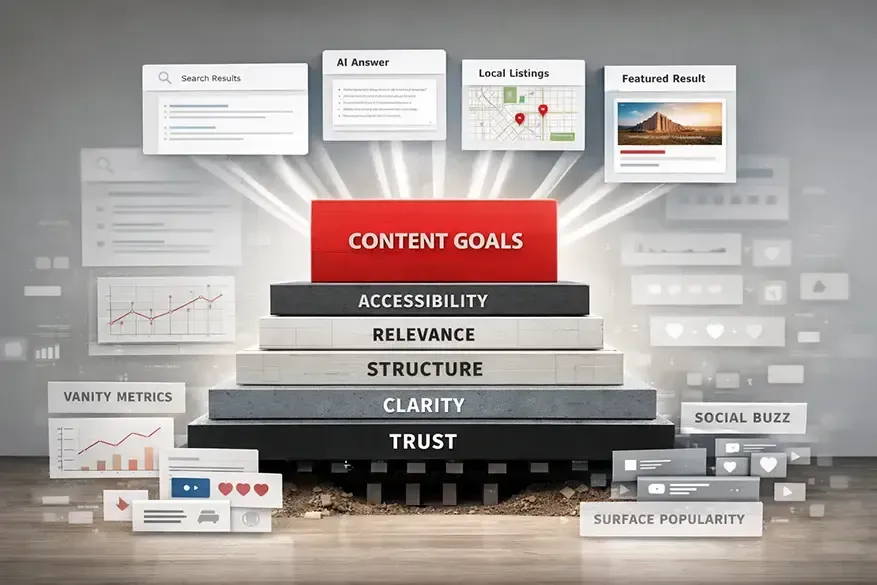
Stacked blocks labeled content goals, accessibility, structure, clarity, and trust in a workspace infographic
By Joseph Cashman • April 17, 2026
Search has changed, but strong SEO still matters. See what old signals matter less, what still counts, and why helpful content drives lasting visibility.
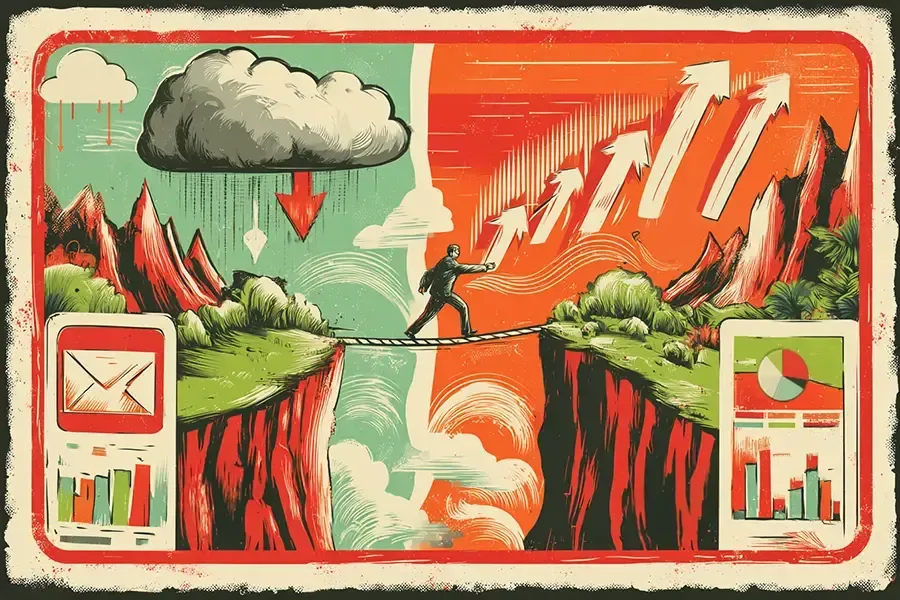
A person walks a tightrope from a storm-filled landscape with an email icon toward a prosperous side with growth charts.
By Joseph Cashman • April 14, 2026
Learn digital marketing strategies to sustain ROI during downturns. Adapt to consumer behavior changes for continued success.
A laptop computer with a magnifying glass and graphs on the screen.
By Joseph Cashman • June 19, 2025
CASE STUDY: From the ashes of Therano's the Mitra Microsampler comes ahead as a viable, novel solution to capillary blood collection.
A man with a beard and glasses next to a woman with a robotic head.
By Joseph Cashman • April 15, 2025
Learn how SEO impacts AI Summaries. What are some ways to improve your GEO? Learn some strategies here.
A group of people are holding hands in front of a row of houses.
By Joseph Cashman • March 25, 2025
Learn how a website redesign improved the Southwest Fair Housing Council's online presence.
A wooden wall with a row of potted plants growing out of it.
By Joseph Cashman • March 17, 2025
Cost-effective digital marketing strategies to boost ROI in uncertain times. Learn SEO content creation, repurposing, free analytics tools, and local SEO tips.
Show More